What Is Ransomware and How Do You Stop It? (2026)
Learn what ransomware is, how ransomware attacks work in 2026, the biggest attacks in history, and the exact steps to protect your devices and data right now.
What Is Ransomware and How Do You Stop It? (2026)
On May 7, 2021, the Colonial Pipeline — which supplies 45% of the US East Coast's fuel — was shut down by a single ransomware attack. Fuel prices spiked. Gas stations ran dry across six states. The company paid $4.4 million in ransom within hours. This is ransomware in 2026: the most profitable and destructive form of cybercrime ever created.
Several paid suites add ransomware rollback — we compare them in our best antivirus 2026 guide.
What Is Ransomware?
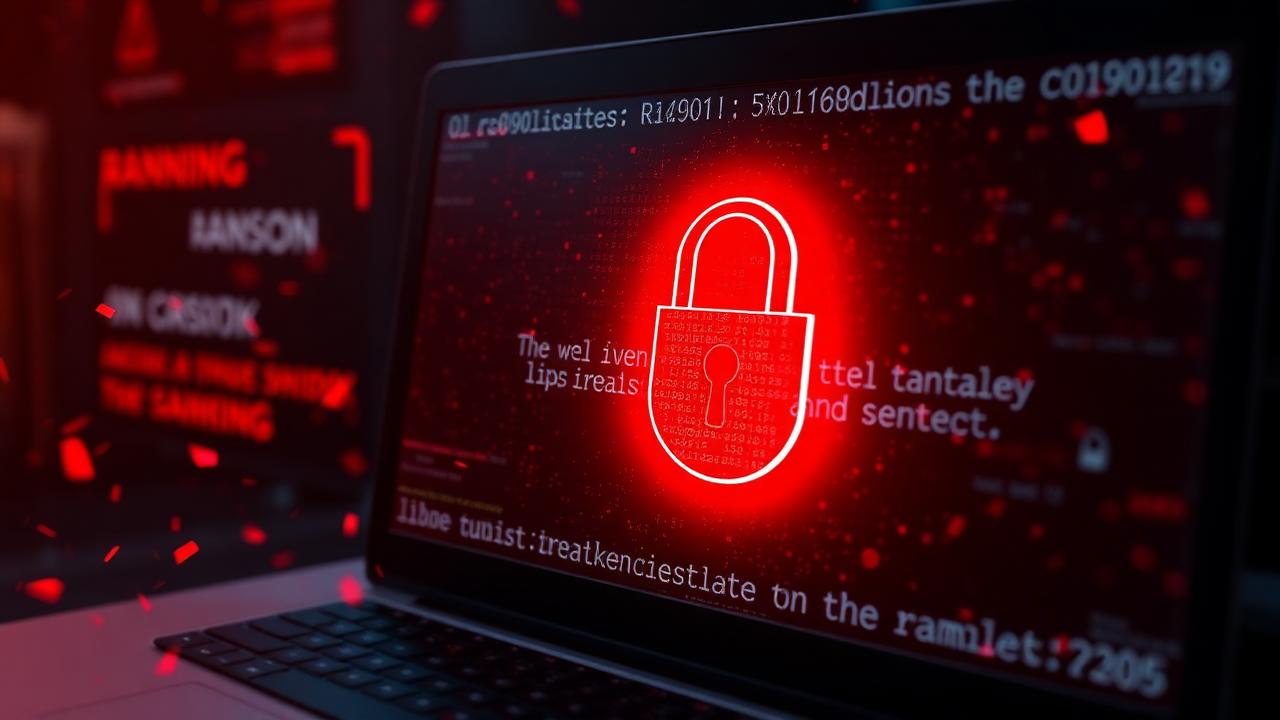
Ransomware is a type of malware that encrypts a victim's files or locks their device, then demands a ransom payment — usually in cryptocurrency — in exchange for the decryption key.
- Crypto ransomware: encrypts files and data. Most common and most damaging.
- Locker ransomware: locks the user out of their device entirely but doesn't encrypt files.
- Double extortion (2020–2026): attackers encrypt files AND steal data, threatening to publish it publicly if ransom isn't paid.
- Triple extortion: additionally threatens DDoS attacks or contacts the victim's customers directly.
How a Ransomware Attack Works (Step by Step)
- Delivery: phishing email with malicious attachment, unpatched software exploit, or stolen VPN credentials.
- Installation: ransomware payload executes silently in the background.
- Reconnaissance: malware spreads through the network, identifying valuable files and backup systems.
- Encryption: thousands of files per minute encrypted using strong AES + RSA cryptography.
- Ransom note: a Tor-based payment portal, cryptocurrency wallet address, and countdown timer appear.
- Payment/Decryption: victim pays in Bitcoin or Monero → may receive a decryption key (not guaranteed).
Ransomware-as-a-Service (RaaS) — Why It's Exploding in 2026
RaaS is a business model where ransomware developers rent their malware to 'affiliates' who conduct attacks and split the ransom. Anyone can now launch ransomware attacks with no technical skills — the barrier to entry is near zero.
- Major RaaS groups in 2026: LockBit, BlackCat/ALPHV, Cl0p, Play, Akira.
- Average ransom demand in 2025: $2.7 million (Sophos State of Ransomware Report).
- Largest single ransom paid: Change Healthcare (2024) — $22 million.
Famous Ransomware Attacks — Real Examples
WannaCry (2017) exploited an unpatched Windows SMB vulnerability and infected 200,000 computers in 150 countries in 4 days. NHS UK alone lost £92 million — operations cancelled, patient records inaccessible — even though Microsoft had released the patch 2 months earlier.
Colonial Pipeline (2021) was a DarkSide RaaS attack. The company paid $4.4M, the pipeline was offline for 6 days, and the US declared a state of emergency over fuel shortages on the East Coast.
Change Healthcare (2024), hit by ALPHV/BlackCat, paid $22M after weeks of disruption to US healthcare billing. Over 100 million patient records were potentially exposed in the breach.
How to Protect Yourself from Ransomware (2026 Best Practices)
- Follow the 3-2-1 backup rule: 3 copies of data, on 2 different media, with 1 offline / air-gapped. Offline backups are immune.
- Keep all software and OS patched — WannaCry exploited a fix released 2 months earlier.
- Never open email attachments from unknown senders — phishing is still the #1 delivery method.
- Use strong unique passwords and enable 2FA on all remote access (VPN, RDP, email).
- Disable RDP if not needed — exposed RDP is a primary initial access vector.
- Use email filtering and reputable endpoint protection.
Check if your IP or network has been flagged.
Open IP Blacklist CheckerCheck if a risky port is exposed on your network.
Open Port CheckerWhat to Do If You're Hit by Ransomware
- Disconnect from the network immediately — unplug ethernet, disable Wi-Fi. Prevent the spread.
- Do NOT pay the ransom immediately. Only ~65% of payers fully recover their files.
- Identify the strain — upload the ransom note to ID Ransomware (id-ransomware.malwarehunterteam.com).
- Check No More Ransom (nomoreransom.org) for free decryptors built by law enforcement and security firms.
- Restore from a clean offline backup if available.
- Report to authorities — FBI IC3 (US), Action Fraud (UK), local police. Consider legal obligations before paying.
Should You Pay the Ransom?
Law enforcement (FBI, Europol, NCSC) advise against paying — it funds criminal operations and does not guarantee recovery. Some businesses pay because weeks of downtime cost more. And in some jurisdictions, paying sanctioned groups (such as certain Russian RaaS gangs) may itself be illegal. Make the call with backups, legal counsel, and incident response in the room — not at 3am with a countdown timer.
Read our complete malware guide.
What Is Malware?Learn how phishing emails actually work.
What Is Phishing?Frequently Asked Questions
What is ransomware?+
Ransomware is malicious software that encrypts a victim's files or locks their device, then demands a cryptocurrency payment in exchange for the decryption key. It is the most financially damaging form of malware, costing businesses and individuals billions of dollars globally every year.
How does ransomware get on your computer?+
The most common delivery methods are phishing emails with malicious attachments or links, exploitation of unpatched software vulnerabilities, compromised Remote Desktop Protocol (RDP) access, and drive-by downloads from compromised websites. Keeping software updated and being cautious with emails prevents the majority of infections.
Should you pay a ransomware ransom?+
Law enforcement agencies including the FBI advise against paying ransoms. Payment funds criminal operations, does not guarantee file recovery, and marks the victim as willing to pay — making repeat attacks more likely. Restoring from offline backups is the most reliable recovery method.
What is the best protection against ransomware?+
The single most effective protection is a tested offline backup following the 3-2-1 rule — three copies of data, on two media types, with one stored offline or air-gapped. Combined with software updates, email filtering, strong passwords, and 2FA on remote access, this protects against the vast majority of ransomware attacks.
What is Ransomware-as-a-Service (RaaS)?+
Ransomware-as-a-Service is a criminal business model where ransomware developers lease their malware to affiliate attackers who conduct attacks and share a percentage of collected ransoms. RaaS has dramatically lowered the technical skill needed to launch ransomware attacks, fuelling the explosion in attack frequency since 2020.
Related articles
Browse all in CybersecurityWhat Is an SSL Certificate and Why It Matters
Read CybersecurityHow Hackers Track Your IP Address
Read CybersecurityWhat Is a Password Strength Checker and Why It Matters
Read CybersecurityHow to Check If a Website Is Safe Before You Visit (2026)
Read CybersecurityWhat Is Two-Factor Authentication (2FA)? Complete Guide 2026
Read CybersecurityWhat Is Phishing? How to Recognize and Avoid It in 2026
ReadTry the related free tools
Hands-on utilities from DigiMetrics Hub that go with this guide.
What Is My IP
Instantly find your public IP address, location, ISP and timezone. Free, no signup required.
Open tool Network & IPDNS Lookup
Free DNS lookup tool: query A, AAAA, MX, CNAME, TXT, NS and SOA records for any domain instantly and see exactly what public DNS resolvers return.
Open tool Security & PrivacyBrowser Fingerprint
Check your browser fingerprint and see what data websites can collect about you. Free privacy tool.
Open tool Security & PrivacyPassword Strength Checker
Test the strength of your password and get tips to make it more secure. Free online tool.
Open tool