What Is Phishing? How to Recognize and Avoid It in 2026
Learn what phishing attacks are, the different types, how to recognize phishing emails and websites, and how to protect yourself in 2026.
What Is Phishing? How to Recognize and Avoid It in 2026
Phishing is the most common cybercrime on the planet — and the most effective. It works because it targets people, not technology. This guide breaks down what phishing is, the different types, how to recognize it instantly, and exactly what to do if you fall for it.
What Is Phishing?
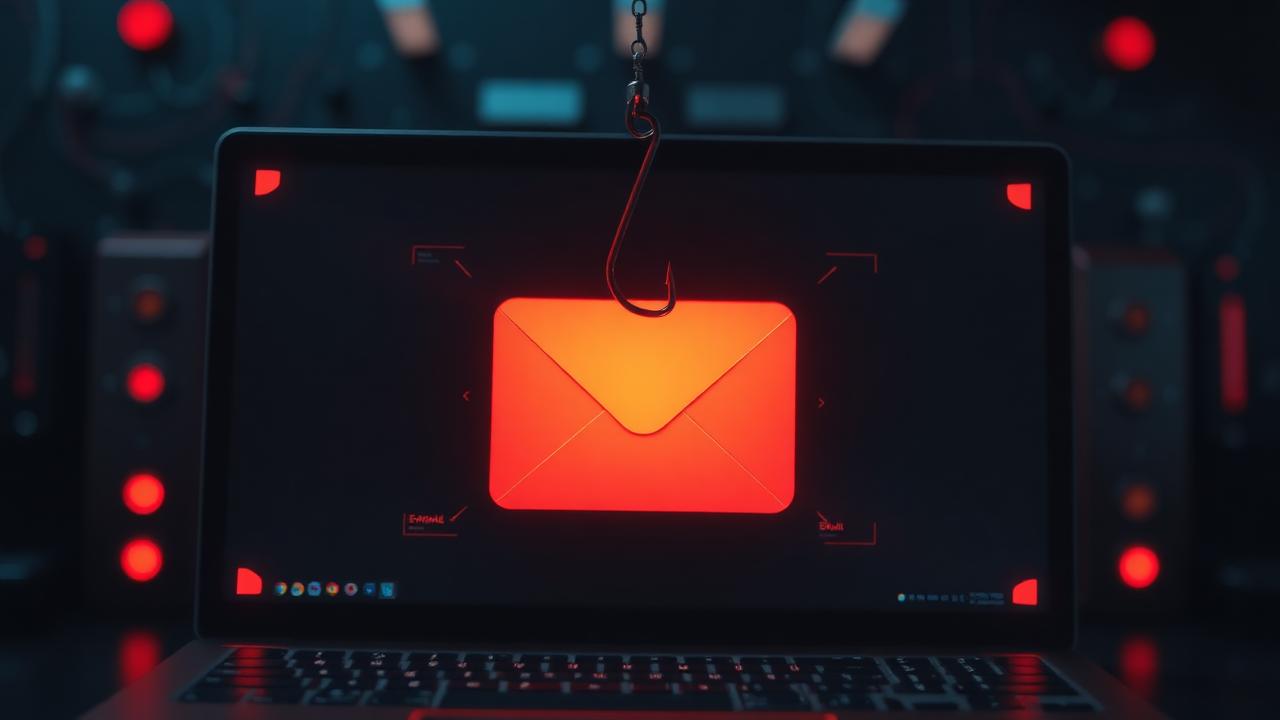
Phishing is a fraudulent attempt to steal personal information — passwords, credit card numbers, identity documents, or money — by impersonating a trustworthy entity in an electronic communication. The name is a play on 'fishing': the attacker dangles a believable lure (an email, text, or call) and waits for someone to bite.
Phishing is the most common form of cybercrime globally. Industry reports estimate roughly 3.4 billion phishing emails are sent every single day in 2026, and one in three data breaches now begins with a phishing message.
Types of Phishing Attacks
- Email phishing — mass fake emails impersonating banks, shipping companies, or tech brands
- Spear phishing — highly personalized email aimed at one specific person, often using public LinkedIn data
- Smishing — phishing via SMS, e.g. 'Your parcel is held, pay £1.99 customs fee'
- Vishing — phishing via phone call, often impersonating bank fraud teams or tax authorities
- Clone phishing — an exact copy of a real email you received earlier, with one link swapped
- Whaling — spear phishing aimed at executives, usually for wire fraud
- Pharming — DNS manipulation that silently redirects you from a real site to a fake clone
How to Recognize a Phishing Email
Urgent or threatening language
'Your account will be suspended in 24 hours' or 'Unusual sign-in detected — verify immediately.' Urgency is engineered to bypass careful thinking.
Suspicious sender address
Look closely: support@paypa1.com instead of support@paypal.com. The display name can be anything; the actual address is what matters.
Generic greetings
'Dear Customer' or 'Dear User' instead of your real name. Real services usually personalize.
Suspicious links
Hover over (or long-press on mobile) every link before clicking. If the displayed text says paypal.com but the real URL is something else, it is phishing.
Requests for personal information
Legitimate companies never ask you to confirm your password, full card number, or 2FA code by email.
Poor grammar and spelling
Many phishing emails contain odd phrasing or obvious typos. AI is improving this for attackers, so absence of typos is not proof of legitimacy — but presence of them is a strong red flag.
How to Recognize a Phishing Website
Once you click, a phishing site usually mimics a real brand login. Inspect the URL bar carefully — look for misspellings, extra subdomains, and suspicious top-level domains (.help, .support, .info instead of .com). Use our SSL Checker to see who actually owns the certificate, and our Domain Age Checker to see if the domain was registered last week.
Real brand domains are years old, owned by the brand, with EV or OV certificates issued to the legal company name. A login page on a 12-day-old domain with a Let's Encrypt cert and no parent brand presence is almost always phishing.
Inspect the SSL certificate of any suspicious URL.
Open SSL CheckerCheck whether a domain was just registered.
Check Domain AgeWhat to Do If You Clicked a Phishing Link
- Disconnect from the internet immediately
- Do not enter any personal information on the page
- Run a full malware scan with reputable security software
- Change passwords on every account that may be affected, starting with email
- Enable 2FA on all important accounts if you have not already
- Report the incident to your IT team, your bank, and your local cybercrime authority
How to Protect Yourself From Phishing
- Never click links in unexpected emails — type the URL yourself
- Always verify the sender's full email address, not just the display name
- Enable 2FA on every account that supports it
- Use spam filters and modern email clients with phishing protection
- When in doubt, call the company on a number from their official site
- Run suspicious URLs through our SSL Checker before entering credentials
Frequently Asked Questions
Can AI-generated phishing be harder to detect?+
Yes. Large language models have dramatically improved grammar, tone, and personalization in phishing messages. AI can also scrape public social media to craft highly convincing spear-phishing emails. This makes link inspection and sender verification more important than ever.
What is the difference between phishing and spear phishing?+
Regular phishing sends mass emails to thousands of people. Spear phishing targets one specific person, using details from LinkedIn, company websites, or leaked data to make the message highly believable. Spear phishing has a much higher success rate.
Should I report phishing emails?+
Yes. Forward phishing emails to your IT team, your email provider's abuse address, and your national cybercrime reporting center. Reporting helps providers block the sender and warn other potential victims.
Is it safe to open a phishing email without clicking anything?+
In most modern email clients, simply opening an email in preview mode is safe. Risks arise when you click links, load remote images, or download attachments. Keep your email client updated and disable automatic image loading for extra safety.
Related articles
Browse all in CybersecurityWhat Is an SSL Certificate and Why It Matters
Read CybersecurityHow Hackers Track Your IP Address
Read CybersecurityWhat Is a Password Strength Checker and Why It Matters
Read CybersecurityHow to Check If a Website Is Safe Before You Visit (2026)
Read CybersecurityWhat Is Two-Factor Authentication (2FA)? Complete Guide 2026
Read CybersecurityWhat Is Malware? Types, Examples, and How to Remove It 2026
ReadTry the related free tools
Hands-on utilities from DigiMetrics Hub that go with this guide.
Browser Fingerprint
Check your browser fingerprint and see what data websites can collect about you. Free privacy tool.
Open tool Network & IPWhat Is My IP
Instantly find your public IP address, location, ISP and timezone. Free, no signup required.
Open tool Network & IPDNS Lookup
Free DNS lookup tool: query A, AAAA, MX, CNAME, TXT, NS and SOA records for any domain instantly and see exactly what public DNS resolvers return.
Open tool Developer ToolsCron Expression Generator
Build or parse cron expressions, see them explained in plain English and preview the next 5 run times in any time zone.
Open tool