
What Is the Internet of Things (IoT)? Complete Guide 2026
Learn what IoT is, how connected devices work, real-world examples of IoT in your home and city, and the biggest IoT security risks you need to know about.
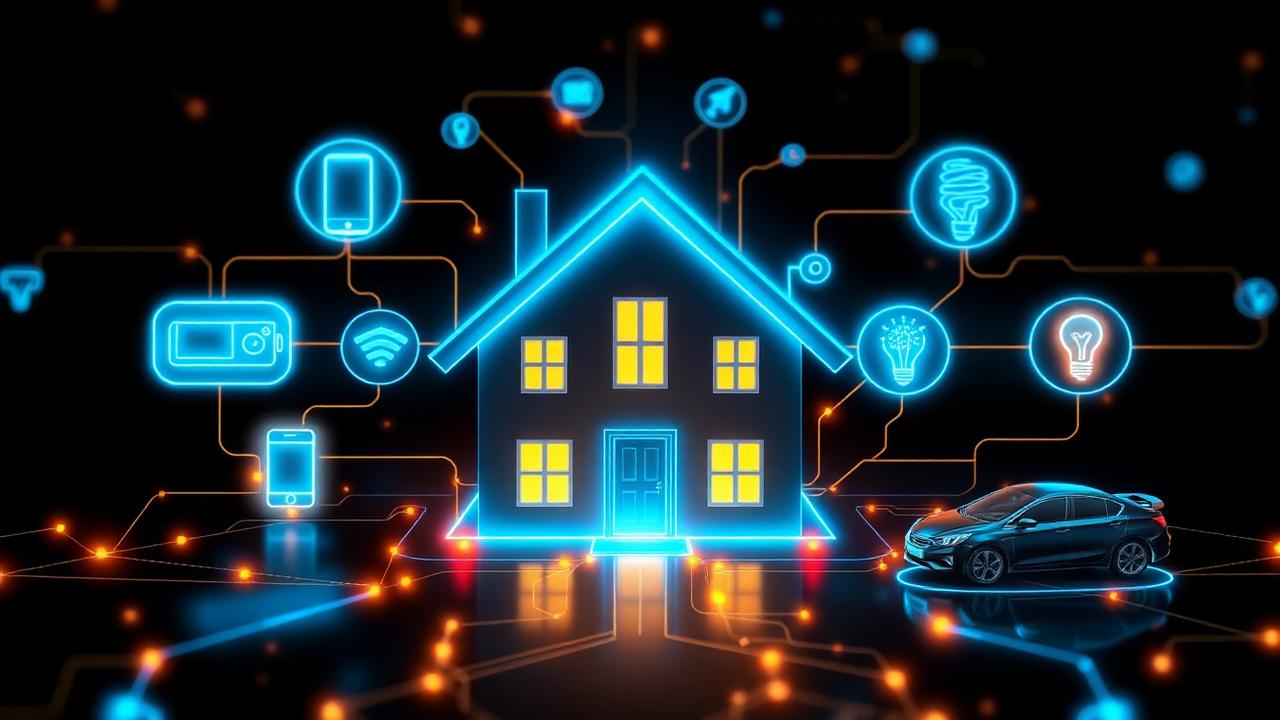
What Is the Internet of Things (IoT)? Complete Guide 2026
Your fridge just ordered milk. Your thermostat adjusted itself before you got home. Your front door unlocked when you arrived. None of this required you to touch a button. That's IoT — and there are now more IoT devices on earth than there are people. Here's how it all works.
What Is the Internet of Things (IoT)?
The Internet of Things refers to the network of physical objects — 'things' — embedded with sensors, software, and connectivity that allows them to collect and exchange data over the internet without human-to-human or human-to-computer interaction.
The term was coined by Kevin Ashton in 1999 at Procter & Gamble while describing RFID supply chain tracking. By 2026, over 18 billion IoT devices are active worldwide, growing to a projected 30 billion by 2030.
The simple breakdown: physical object + sensor + connectivity + software = IoT device.
How IoT Devices Work (Step by Step)
- Sensors collect data from the physical environment (temperature, motion, light, GPS).
- The device processes data locally or sends it to the cloud.
- Software analyses the data and decides on an action.
- An actuator carries out the action (turning on a light, sending an alert, unlocking a door).
- Data is stored, reported, or used to improve future decisions.
IoT in Your Home — Smart Home Devices
- Smart speakers (Amazon Echo, Google Nest) — voice control hub.
- Smart thermostats (Nest, Ecobee) — learn your schedule, optimise heating.
- Smart security cameras (Ring, Arlo) — motion alerts, remote viewing.
- Smart locks — keyless entry, access logs.
- Smart lighting (Philips Hue) — remote control, automations.
- Smart appliances — fridges that track expiry dates, washing machines remotely started.
A typical smart home in 2026 has 20–30 connected devices — most homeowners massively underestimate this number.
IoT Beyond the Home — Industrial and City Applications
- Industrial IoT (IIoT): factory machines self-reporting maintenance needs, warehouse robots.
- Smart cities: traffic lights that adjust to real-time congestion, smart bin sensors, air quality monitors.
- Healthcare: wearable monitors for heart patients, hospital asset tracking.
- Agriculture: soil moisture sensors, drone irrigation, livestock tracking.
- Transportation: fleet tracking GPS, predictive vehicle maintenance.
How IoT Devices Connect — The Protocols
- WiFi — most smart home devices; convenient but power-hungry.
- Bluetooth / BLE — short range, low power (wearables, beacons).
- Zigbee and Z-Wave — mesh networks, popular for smart home sensors.
- MQTT — lightweight messaging protocol, the backbone of IoT data transfer.
- Cellular (4G/5G) — outdoor and industrial devices without WiFi access.
IoT Security Risks — Why This Matters
Most IoT devices have weak or no security by design — default passwords, no encryption, and firmware that rarely gets updated.
The Mirai Botnet (2016) hijacked roughly 600,000 IoT devices — cameras and routers — and used them to launch the largest DDoS attack in history, taking down Twitter, Netflix, and Reddit. Attack vectors are almost always the same: default credentials never changed, unpatched firmware, no HTTPS, and exposed ports.
Check if a port on your network is exposed.
Open Port CheckerCheck your IP blacklist status.
Open IP Blacklist CheckerHow to Secure Your IoT Devices
- Change default passwords on every device immediately.
- Put IoT devices on a separate guest WiFi network, isolated from your main devices.
- Disable features you don't use (remote access, UPnP).
- Keep firmware updated.
- Buy from reputable brands with public update commitments.
- Consider a router with built-in IoT security (Eero, Firewalla).
Read our full firewall guide.
What Is a Firewall?Frequently Asked Questions
What is an example of an IoT device?+
Common IoT devices include smart thermostats (Nest, Ecobee), smart speakers (Amazon Echo, Google Nest), fitness trackers (Fitbit, Apple Watch), smart security cameras, connected cars, and industrial sensors. Essentially any physical object with internet connectivity and sensors is an IoT device.
How many IoT devices are there in the world?+
As of 2026, there are over 18 billion active IoT devices globally, outnumbering the human population. This number is projected to exceed 30 billion by 2030 as smart home, industrial, and healthcare adoption accelerates.
Is a smartphone an IoT device?+
Technically, smartphones meet the IoT definition — they have sensors, connectivity, and internet access. However, IoT typically refers to devices where the primary function is sensing and automation rather than direct user interaction, so smartphones are generally considered separate from IoT.
Are IoT devices a security risk?+
Yes, significantly. Many IoT devices ship with weak default passwords, no automatic updates, and minimal security design. The 2016 Mirai botnet attack demonstrated how compromised IoT cameras and routers can be weaponised for massive cyber attacks. Changing default passwords and isolating devices on a guest network are essential precautions.
What is the difference between IoT and smart home?+
Smart home is a consumer subset of IoT — it refers specifically to connected devices in a home environment. IoT is the broader category that includes smart homes plus industrial sensors, healthcare wearables, smart city infrastructure, connected vehicles, and much more.
Related articles
Browse all in IP & NetworkingWhy Does My IP Address Keep Changing? (And Should You Be Worried?)
Read IP & NetworkingProxy-Seller Review 2026: Proxy Types, Features, Pricing, Testing & Affiliate Offer
Read IP & NetworkingWhy Is My DNS Slow? 7 Fixes for Slow DNS Lookups (2026)
Read IP & NetworkingWhat Is My IP Address and How Do I Find It? (Public vs Private, 2026)
Read IP & NetworkingWhat Is DNS and How It Works (Beginner Guide)
Read IP & NetworkingIPv4 vs IPv6 Explained (Simple Comparison)
ReadTry the related free tools
Hands-on utilities from DigiMetrics Hub that go with this guide.
What Is My IP
Instantly find your public IP address, location, ISP and timezone. Free, no signup required.
Open tool Network & IPDNS Lookup
Free DNS lookup tool: query A, AAAA, MX, CNAME, TXT, NS and SOA records for any domain instantly and see exactly what public DNS resolvers return.
Open tool Network & IPWHOIS Lookup
Free WHOIS lookup: find who owns a domain, when it was registered, when it expires, plus its registrar, nameservers and status codes. No signup needed.
Open tool Network & IPPort Checker
Check if any port is open or closed on any server. Free online port scanner, no signup needed.
Open tool